
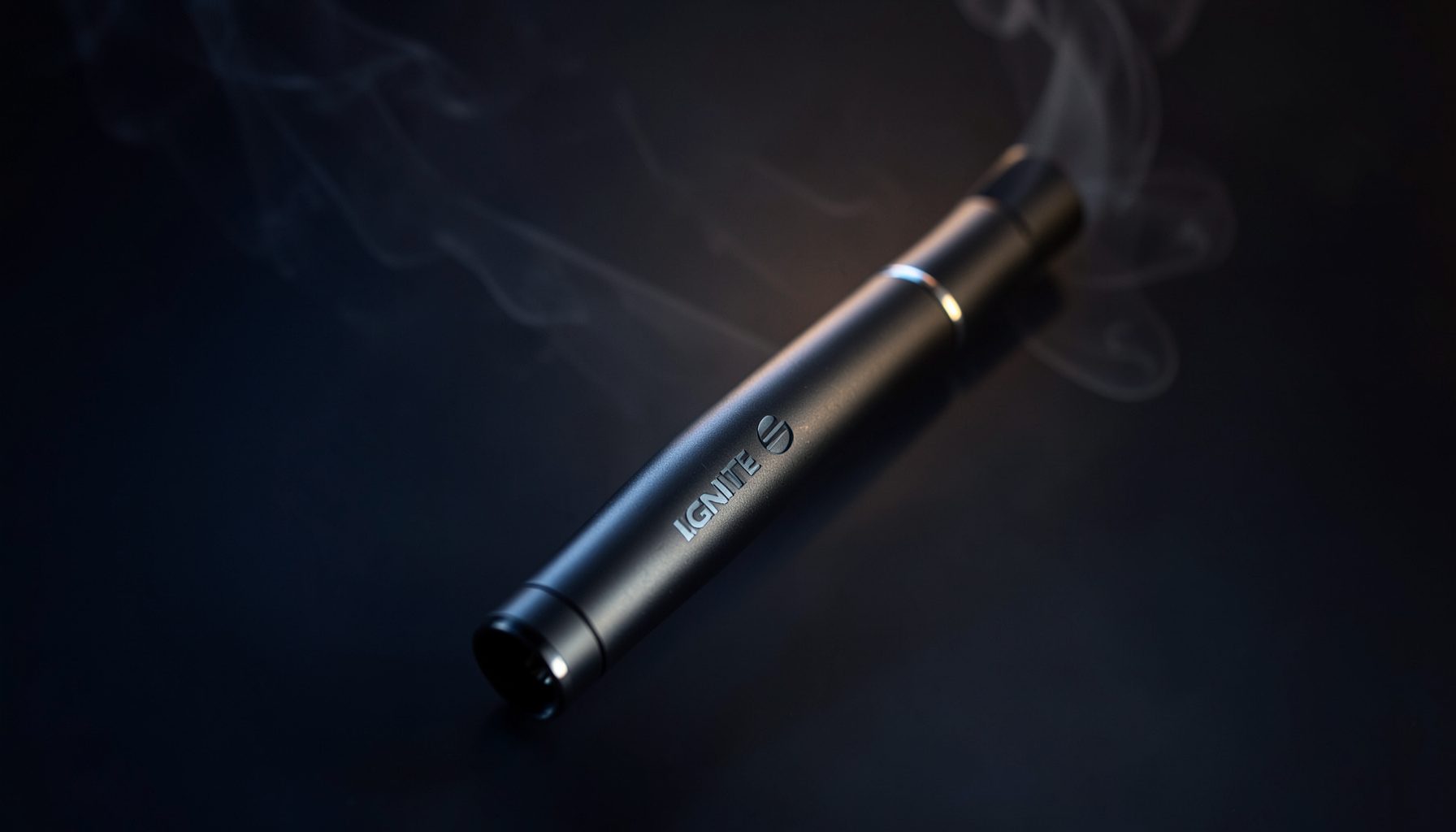
Why some IGNITE flavours deliver a cooling sensation
Many vapers in Australia reach for a disposable expecting only the listed fruit or mint profile, then notice a brisk finish on the exhale that no other ingredient seems to explain. That briskness is a deliberate sensory design choice rather than an accident of formulation. IGNITE's catalogue includes several blends labelled with words such as "Ice" or "Cool" precisely because the brand engineers a temperature-like feel into the vapour. Understanding what creates the effect, and why it has become a flavour trend rather than a side note, helps customers choose the right device and flavour with confidence.
The sensation is unrelated to the actual temperature of the aerosol. It comes from a small group of aroma compounds that trick specific receptors in the mouth and throat. Across the V15, V25 and V60 ranges, these compounds are blended at carefully measured percentages so the cooling is noticeable but never harsh. The result is a category of products that feels refreshing in any climate, and especially welcome during long Australian summers from Perth to Brisbane.
The science of cooling agents in e-liquid
Cooling in modern disposables is built from a handful of synthetic and naturally derived ingredients. The oldest and best known is menthol, a compound originally isolated from peppermint oil. Menthol carries its own minty aroma, which is why a pure menthol blend tastes distinctly herbal. Alongside it, formulators frequently use menthone, eucalyptol and methyl lactate, each contributing a different balance of aroma and chill.
Newer synthetic coolants have changed the way brands design chilled flavours. Compounds such as WS-23 and WS-3 produce a clean, almost odourless coolness that does not interfere with fruit or candy profiles. This is what allows an iced mango or iced grape blend to taste primarily of fruit while still finishing with a frosty exhale. Because these synthetics work at very low concentrations, they let flavour chemists layer multiple notes without one element dominating the others.
| Cooling agent | Source | Aroma contribution | Sensation profile |
|---|---|---|---|
| Menthol | Natural peppermint | Strong mint | Bright, sharp, lingering |
| WS-23 | Synthetic | Almost none | Clean, mid-mouth chill |
| WS-3 | Synthetic | Very mild | Slow-building, deep throat |
| Menthyl lactate | Semi-synthetic | Subtle mint | Smooth, gentle, long-lasting |
| Eucalyptol | Eucalyptus-derived | Herbal, piney | Crisp, slightly medicinal |
Each of these ingredients triggers the same family of sensory receptors, but the perceived strength and location of the coolness can differ noticeably. A blend built on menthol feels strongest on the tongue, while a WS-23 heavy formula tends to register in the back of the throat. Knowing this difference helps explain why two "ice" labelled products from the same brand can feel quite distinct.
How cooling compounds interact with the body
The chill produced by these ingredients is not psychological. It is the result of a well-studied receptor called TRPM8, which sits in the nerve endings of the mouth, throat and nasal passages. TRPM8 normally fires when tissue temperature drops below about 25 degrees Celsius, signalling the brain that something cold is present. Menthol, WS-23 and similar molecules happen to fit the same receptor, opening it artificially and creating the perception of cold without any actual temperature change.
Because TRPM8 is a single shared pathway, the brain cannot easily distinguish between a true cold drink and a coolant-laced vapour. The sensation is genuine even if the tongue is not actually cooler. This is also why cooling flavours can feel more intense on a hot day in Sydney or after a workout at the gym in Melbourne. The receptors are already primed for thermal signals, so the coolant effect is amplified.
Regular users sometimes notice a mild desensitisation after extended sessions. The receptors briefly downregulate when continuously stimulated, which is why a long afternoon of vaping can feel less chilled than the first few puffs of the day. Switching flavours or taking a short break usually restores the full effect.
Why iced blends have become a flavour category of their own
Fruit-only vapes have been a staple for years, but the addition of cooling introduced a new sub-category that now dominates many Australian tobacconist shelves. The reason is partly physiological and partly cultural. A chilled finish lifts sweetness, softens tart edges and makes tropical fruits like mango, lychee and passionfruit taste brighter, which suits the Australian preference for bold, juicy profiles.
The history of menthol in nicotine products also plays a role. Australia moved early on flavoured combustible cigarettes, banning the addition of menthol and other characterising flavours well before several other markets. Long-term adult smokers who previously relied on menthol varieties often transitioned to menthol or ice-labelled vapour products, and demand for chilled options has remained strong even as regulations tightened around the broader category.
There is also a practical element. Cooling flavours tend to feel less heavy on the throat at higher outputs, which suits higher-wattage devices such as the V60. The combination of strong fruit notes with a clean cool finish produces a profile that is repeatable across the day, a quality many users look for when choosing a daily disposable.
Why cooling flavours resonate in the Australian market
Australia's climate makes cooling profiles an easy sell. Summers in Brisbane, Adelaide and inland regions regularly exceed 35 degrees Celsius, and even coastal cities like Perth and the Gold Coast stay warm well into autumn. A flavour that evokes a cold drink or a sea breeze fits the conditions many vapers experience for half the year.
Regulatory context has shaped availability. The Therapeutic Goods Administration introduced a prescription framework for nicotine vapour products, and subsequent reforms tightened advertising and packaging rules across all states and territories. These shifts pushed many users toward clearly labelled, compliant products with transparent ingredient lists, and disposables from established brands became a default choice. The Australian Competition and Consumer Commission has reinforced truth in labelling, so claims like "Ice" or "Cool" on packaging are expected to match the actual formulation.
Local retail habits reinforce the pattern. Convenience stores in Melbourne's CBD, dedicated vape shops in Parramatta, and online retailers serving regional Tasmania all report consistent demand for chilled blends year round, with peaks during the warmer months. The flavour category is no longer a novelty but a stable part of the national mix.
How cooling intensity varies across the IGNITE range
Within the IGNITE catalogue, the intensity of cooling varies by device and flavour. The V15 line, with its compact output, delivers a softer, more rounded chill that pairs well with lighter fruits such as apple and grape. The V25 offers a slightly stronger cooling note, suited to users who want the coolness to be a clear feature rather than a background detail. The V60, with the highest output in the range, carries the most pronounced frost, and many of its iced variants are designed to leave a long, clean finish on the exhale.
The differences across the three lines reflect how output power interacts with the volatile cooling compounds. Higher wattage vaporises more of the coolant per puff, which is why the same ingredient ratio can feel quite different between the V15 and the V60. Recognising this helps users match the device to the intensity they prefer, whether they want a subtle background chill or a feature that defines the entire flavour experience.